
Avis Waterman and the Alpini
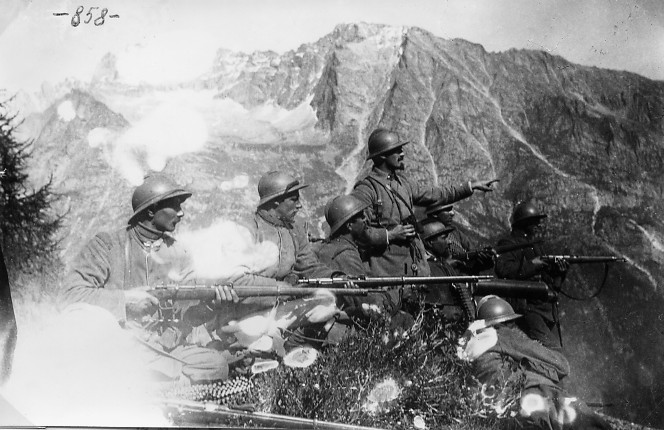
Riportiamo di seguito l’articolo originale redatto dalla Dottoressa Seul sulla reporter di guerra Avis Waterman scritto in lingua inglese. A seguire, è riportata la traduzione in italiano.
The American woman war correspondent who covered the Italian front for the London Times
News of the fighting of the Alpini on the Italian front was brought to Britain and the world by a woman. Mrs. Waterman, or Signora Waterman, as Avis Waterman (1882 – 1939) was known, was the Milan correspondent of the prestigious London daily The Times during the First World War.
After Italy’s entry into the war, Waterman shifted the focus of her reporting to the fighting on the Italian front. She gathered her first war news in the summer of 1915 under challenging circumstances and telegraphed her reports to The Times from Switzerland to evade the severe Italian censorship. Once she was even arrested and held as a spy. But the Comando Supremo soon trusted her and granted her permission to visit the war zone. From May 1916 until the beginning of 1918, she was accredited to the Uffico Stampa under the direction of Colonello Brigadiere Eugenio Barbarich and enjoyed high esteem among Italian soldiers and officers, and especially the Alpini, who featured prominently in her reporting.
On 20 June 1917, The Times published a long dispatch by Waterman about the conquest of the Corno di Cavento (3,402 m). The mountain in the Adamello group in the border region between Italy and Austria-Hungary in the Trentino was the scene of important military operations during the First World War. In April – May 1916, the Alpini conquered the line Monte Fumo – Lobbia Alta, then the Crozzon di Folgorida, the Crozzon di Lares and the Passo di Cavento, and finally the Passo di Folgorida and the Passo delle Topette. The Corno di Cavento, however, remained in the hands of the Austrians. It was captured by the Alpini a year later, on 15 June 1917, with a daring operation on several fronts: after an intense bombardment of the summit, the ski mountaineers (sciatori) attacked from the Lares watch, while rock climbers (rocciatori) attacked from the north crest and the difficult northwest wall.
Under the headline ‘Glacier Battle in Trentino. Alpini’s Exploit at 11,000 Feet’, Waterman described in colourful words the landscape of rocks and snow where the military operation was taking place and the challenge of getting there: ‘Since the world began men never made war under such conditions’, she wrote.
After travelling by a tiny railway, a motor car, and a specially constructed mountain automobile, Waterman ascended in the middle of the night in the iron baskets of several teleferiche and finally crawled up the mountains for an hour and a half until she reached a point from where she could oversee the field of battle. From her safe hiding place, she witnessed the conquest of the Corno di Cavento by the Alpini in the early morning of 15 June:
‘For three hours we watched the varying fortunes of these true heroes and sportsmen. The Skiatori [sic] and climbers ran their deadly race against terrific odds with a persistence and precision beyond all praise. [… The Alpini] won one of the most formidable heights I have seen on this amazing front. Such perfection and preparation, courage and decision in execution were manifested as to make Italy’s Allies proud and glad.’
Waterman wrote for England’s most famous newspaper. The Times claimed to be the ‘paper of record’, covering all events of importance. Despite a rather small circulation, its influence was considerable as it was read in educated, journalistic and political circles in Britain and abroad. Because of the importance of The Times, Waterman’s war reports were widely reprinted and quoted by newspapers in Britain, in Allied and neutral countries, including Italy, and in the British Empire, for instance in Australia and New Zealand. Thus, her reporting shaped the international perception of the Alpini and the war on the Italian front.
Fellow journalists paid tribute to Waterman’s courage and journalistic skills. Hamilton Fyfe, a renowned war correspondent of the Daily Mail, met Waterman on the Adamello front in June 1917 and wrote: ‘A war correspondent, whom Italian soldiers took pleasure in saluting was a woman, the only woman I have met engaged in reporting this war. [… The] way she reported, on almost the highest part of the Italian front, a battle in which the Italians captured a horn of snow-covered rock which had a very troublesome gun mounted on it, proved her to be a woman of rare spirit.’
Another British journalist, Herbert Bailey, remarked in 1919 that Waterman was so highly regarded by the Alpini that once they composed and sang some verses of a popular soldiers’ song in her honor. She was also the only woman correspondent to be accredited with the Italian Cross of War by the Alpini.
After the war, Waterman fell into oblivion. In September 1919, her employment with The Times ended. During the 1920s and 1930s, she lived in Italy, with spells in England, the United States, Switzerland, and France, and sought work as a journalist for English and American papers, but with little success. In 1939 she died in Paris, impoverished and lonely, and was buried in an anonymous mass grave.
Today, little remains of Avis Waterman. No history of journalism or war reporting mentions the woman who reported from some of the most brutal battlefields of the First World War.
The Museo Storico Nazionale degli Alpini, however, holds a great treasure: a photograph of Avis Waterman on the Adamello front in June 1917, at the time of the Alpini’s capture of the Corno di Cavento. This photo not only depicts an attractive young lady, dressed in a long skirt, a heavy coat, leather gloves and a bright knitted scarf and hat. It also bears witness to a fearless woman in a male-dominated and dangerous profession. A woman who won the respect and admiration of the Alpini.
ITALIANO
La donna americana, corrispondente di guerra che raccontò il fronte italiano per il Times di Londra
Le notizie sui combattimenti degli Alpini sul fronte italiano furono portate in Gran Bretagna e nel mondo da una donna. Mrs. Waterman, o Signora Waterman, come era conosciuta Avis Waterman (1882–1939), era la corrispondente a Milano, del prestigioso quotidiano londinese The Times durante la Prima Guerra Mondiale.
Dopo l’entrata in guerra dell’Italia, la Waterman spostò il focus dei suoi reportage sui combattimenti del fronte italiano. Raccolse le sue prime notizie di guerra nell’estate del 1915, in circostanze difficili e telegrafava i suoi resoconti al Times dalla Svizzera, per eludere la severa censura italiana. Una volta, fu persino arrestata e trattenuta come spia. Ma il Comando Supremo presto si fidò di lei e le concesse il permesso di visitare la zona di guerra. Dal maggio 1916 fino all’inizio del 1918, fu accreditata presso l’Ufficio Stampa, sotto la direzione del Generale di Brigata Eugenio Barbarich e godette di grande stima tra i soldati e gli ufficiali italiani e in particolare tra gli Alpini, che furono spesso protagonisti dei suoi reportage.
Il 20 giugno 1917, il Times pubblicò un lungo dispaccio della Waterman sulla conquista del Corno di Cavento (3.402 m). La montagna, che appartiene al gruppo dell’Adamello, situato nella regione di confine tra Italia e Austria-Ungheria in Trentino, fu teatro di importanti operazioni militari durante la Prima Guerra Mondiale. Nell’aprile-maggio 1916, gli Alpini conquistarono la linea Monte Fumo-Lobbia Alta, poi il Crozzon di Folgorida, il Crozzon di Lares e il Passo di Cavento e infine il Passo di Folgorida e il Passo delle Topette. Il Corno di Cavento, però, rimase in mano agli austriaci. Fu conquistato dagli Alpini un anno dopo, il 15 giugno 1917, con un’audace operazione su più fronti: dopo un intenso bombardamento della cima, gli sciatori attaccarono dalla guardia di Lares, mentre i rocciatori attaccarono dalla cresta nord e dalla difficile parete nord-ovest
Sotto il titolo “Battaglia sul ghiacciaio in Trentino. L’impresa degli Alpini a 11.000 piedi”, la Waterman descrisse con parole vivide il paesaggio di rocce e neve, dove si svolgeva l’operazione militare e la difficoltà nel raggiungerlo: “Da quando il mondo esiste, gli uomini non hanno mai fatto la guerra in simili condizioni”, scrisse.
Dopo aver viaggiato su una piccola ferrovia, un’automobile e una speciale auto da montagna, la Waterman salì, nel cuore della notte, nei cesti di ferro di diverse teleferiche e infine, si arrampicò sulle montagne per un’ora e mezza, fino a raggiungere un punto da cui poteva osservare il campo di battaglia. Dal suo nascondiglio sicuro, assistette alla conquista del Corno di Cavento, da parte degli Alpini, la mattina presto del 15 giugno:
“Per tre ore abbiamo osservato le alterne fortune di questi veri eroi e sportivi. Gli sciatori e i rocciatori hanno corso la loro corsa mortale contro probabilità terrificanti con una perseveranza e una precisione oltre ogni lode. […] Gli Alpini conquistarono una delle alture più formidabili che io abbia visto su questo incredibile fronte. Tale perfezione e preparazione, coraggio e decisione nell’esecuzione furono manifestati da rendere orgogliosi e felici gli Alleati dell’Italia.”
La Waterman scriveva per il più famoso quotidiano inglese. Il Times si definiva il “giornale di riferimento”, coprendo tutti gli eventi di importanza. Nonostante una tiratura piuttosto ridotta, la sua influenza era considerevole, poiché veniva letto in ambienti colti, giornalistici e politici in Gran Bretagna e all’estero. Per l’importanza del Times, i reportage di guerra della Waterman furono ampiamente ristampati e citati da giornali in Gran Bretagna, nei paesi alleati e neutrali, compresa l’Italia e nell’Impero britannico, come ad esempio in Australia e Nuova Zelanda. Così, i suoi reportage contribuirono a formare la percezione internazionale degli Alpini e della guerra sul fronte italiano.
I colleghi giornalisti tributarono omaggio al coraggio e alle capacità giornalistiche della Waterman. Hamilton Fyfe, noto corrispondente di guerra del Daily Mail, incontrò la Waterman sul fronte dell’Adamello nel giugno 1917 e scrisse: “Una corrispondente di guerra, che i soldati italiani salutavano con piacere, era una donna, l’unica donna che ho incontrato impegnata a raccontare questa guerra. […] Il modo in cui ha raccontato, quasi sulla parte più alta del fronte italiano, una battaglia in cui gli italiani conquistarono un corno di roccia innevata su cui era montato un cannone molto fastidioso, ha dimostrato che era una donna di raro spirito.”
Un altro giornalista britannico, Herbert Bailey, osservò nel 1919, che la Waterman era così stimata dagli Alpini, che una volta composero e cantarono alcune strofe di una popolare canzone dei soldati in suo onore. Fu anche, l’unica donna corrispondente di guerra ad essere insignita della Croce di Guerra italiana dagli Alpini.
Dopo la guerra, la Waterman cadde nell’oblio. Nel settembre 1919 terminò il suo impiego con il Times. Negli anni Venti e Trenta visse in Italia, alcuni periodi in Inghilterra, Stati Uniti, Svizzera e Francia, cercando lavoro come giornalista per giornali inglesi e americani, ma con scarso successo. Nel 1939 morì a Parigi, povera e sola e fu sepolta in una fossa comune in maniera del tutto anonima.
Oggi, poco rimane di Avis Waterman. Nessuna storia del giornalismo o del reportage di guerra menziona la donna, che raccontò alcuni dei più brutali campi di battaglia della Prima Guerra Mondiale.
Il Museo Nazionale Storico degli Alpini, tuttavia, conserva un grande tesoro: una fotografia di Avis Waterman sul fronte dell’Adamello nel giugno 1917, al tempo della conquista del Corno di Cavento da parte degli Alpini. Questa foto non solo ritrae una giovane donna attraente, vestita con una lunga gonna, un pesante cappotto, guanti di pelle e una sciarpa e un cappello di lana vivaci. Testimonia anche, una donna senza paura, in una professione dominata dagli uomini e pericolosa. Una donna che conquistò il rispetto e l’ammirazione degli Alpini.
E-mail: sseul@uni-bremen.de
Sito web: https://stephanieseul.com/